
Go Girl!
Our living room has this air of an open source digital studio, sizzling with contagious creativity. I have always encouraged the kids to do their stuff in a shared space … Continue reading Go Girl!
a homeschooling blog about Simon, a young mathematician and programmer, and his little sister Neva. Visit https://simontiger.com
Our living room has this air of an open source digital studio, sizzling with contagious creativity. I have always encouraged the kids to do their stuff in a shared space … Continue reading Go Girl!

This is Simon’s preferred way of learning math and physics: try to work out the formulas independently. This time it’s the collision formulas which he attempts to depict geometrically. You … Continue reading DIY: Derive It Yourself
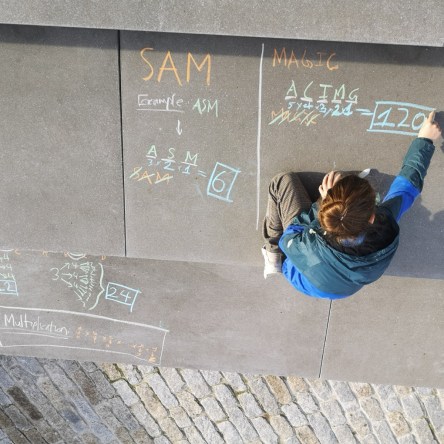
Combinatorics problems (each one builds on the previous one): If there’s a sequence of tasks you need to do, and you know how many ways there are to do each … Continue reading Some weekend combinatorics
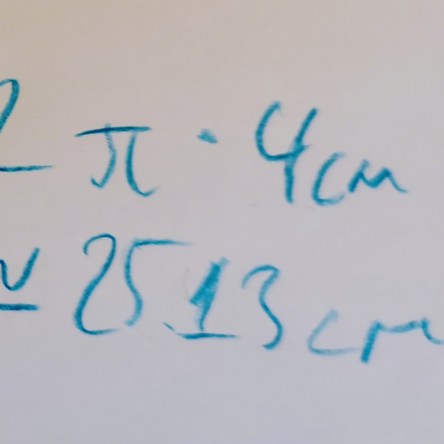
How fast can a fidget spinner spin? Is it not that fast or can you literally use it as a car wheel? Inspired by Matt Parker, who listened to the … Continue reading What is a fidget spinner’s actual speed, in km/h?
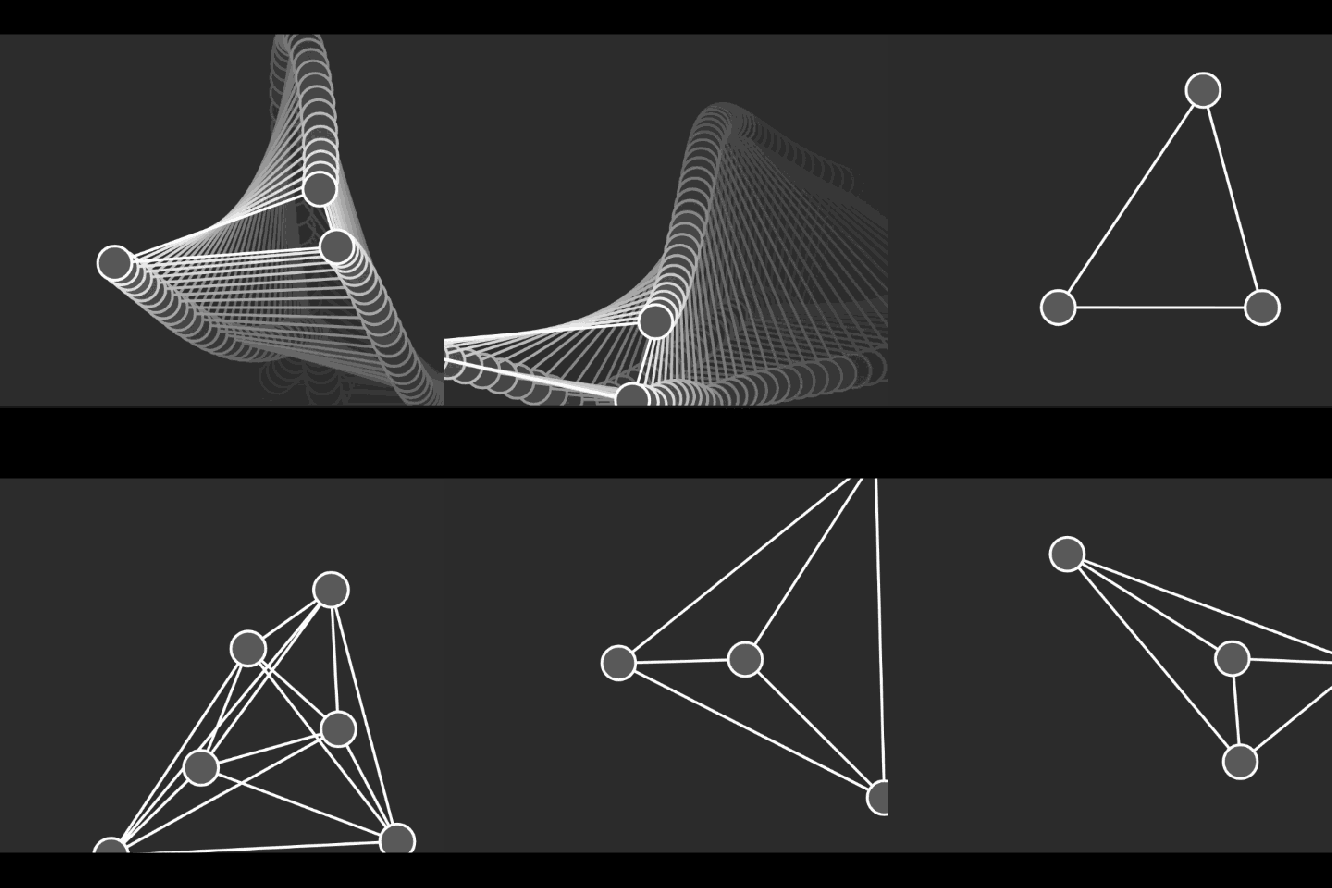
It’s not that easy to make a chaos model. A system where a slight tweak in the initial conditions creates major change down the road and even makes it impossible … Continue reading Chaos with Legos and Shapes

One of our favorite games to play together is Telestrations, a version of the telephone game where players illustrate a word and pass it on for the next player to … Continue reading Telestrations
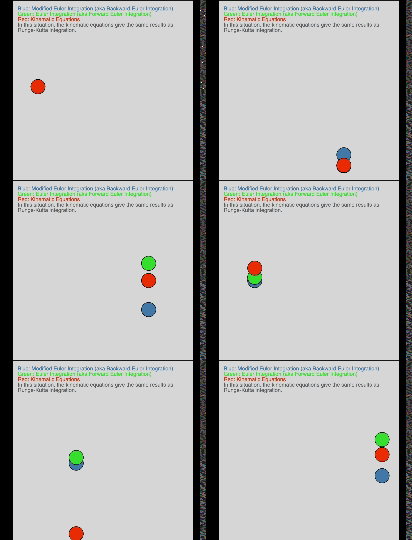
Simon has made a visual about what he calls “three different ways to make a physics simulation”: Blue: Modified Euler Integration (aka Backward Euler Integration); Green: Euler Integration (aka Forward … Continue reading Integration Techniques for Physics Simulations
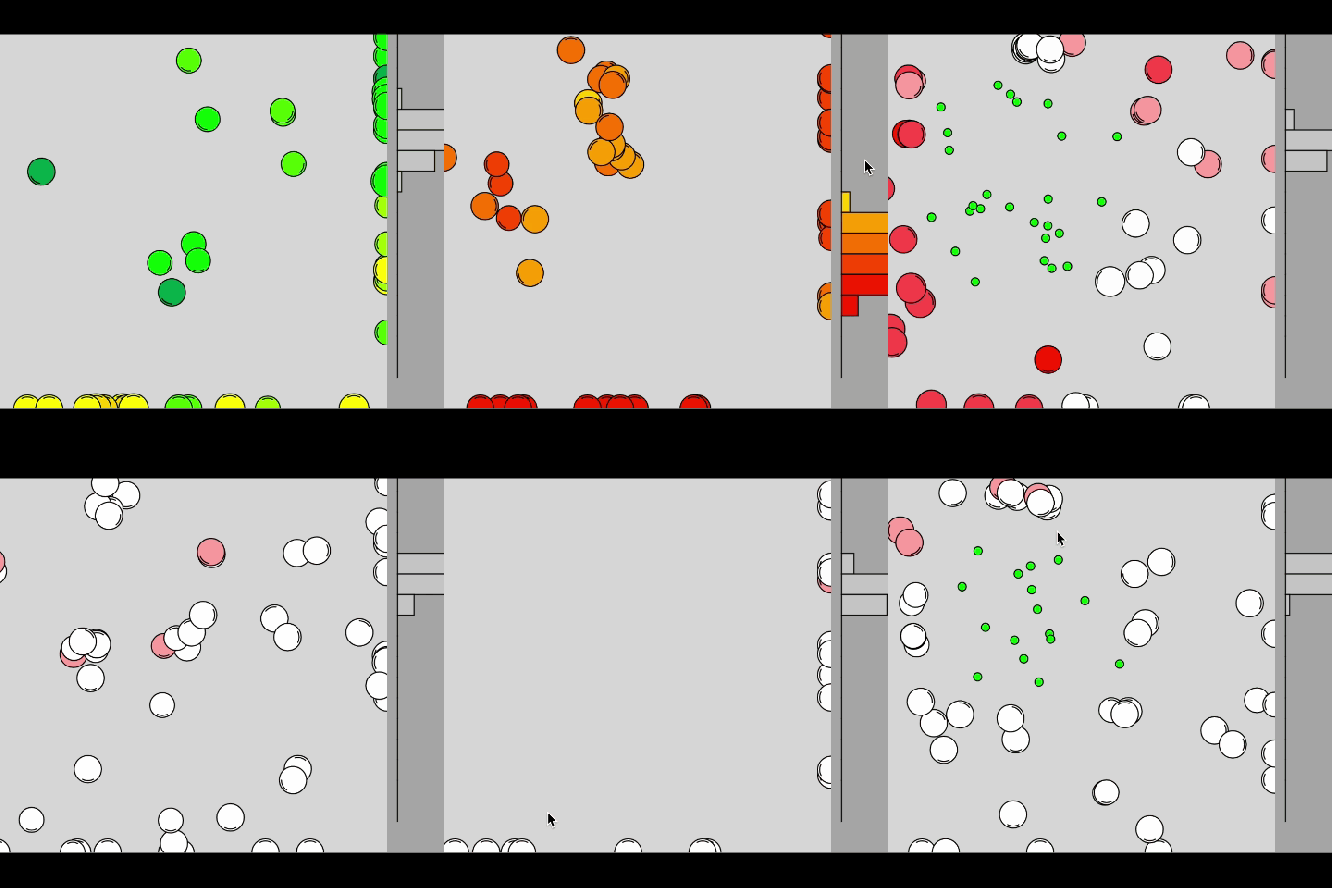
Simon’s code: https://editor.p5js.org/simontiger/sketches/5Sx2Solm7 Simon made this by reverse-engineering Primer’s project as shown in his video Simulating Natural Selection.
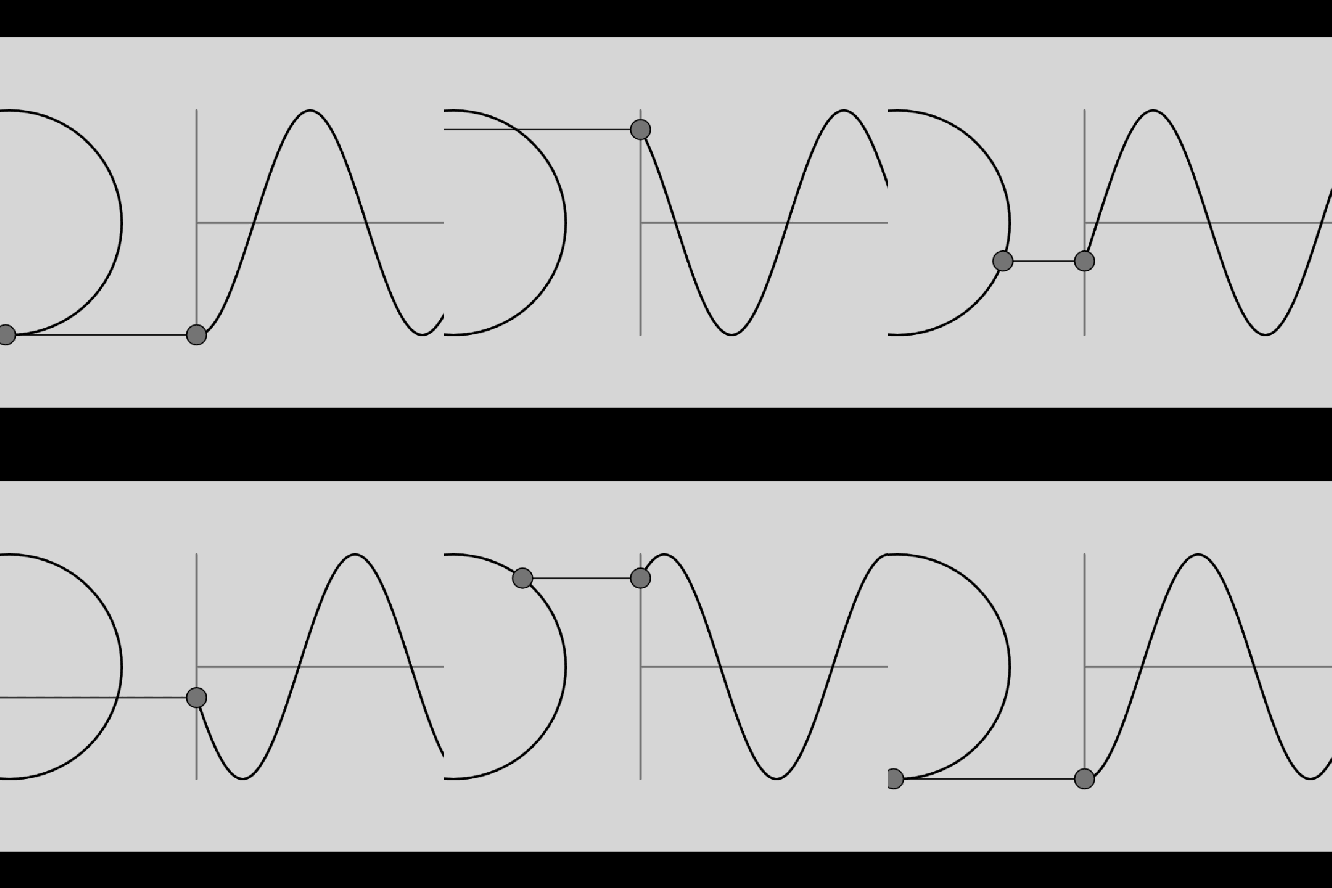
Simon’s really proud of himself for being helpful during The Coding Train’s tutorial recording sessions. He hopes to have converted Dan Shiffman to approach trigonometry as something about circles, not … Continue reading Trig is About Circles
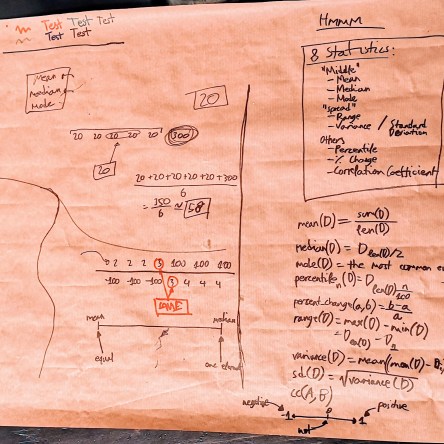
Really enjoying the chapter on Statistics in our bed-time read, Math with bad Drawings by Ben Orlin, who approaches the subject in the most profound and at the same time … Continue reading How to Lie Honestly
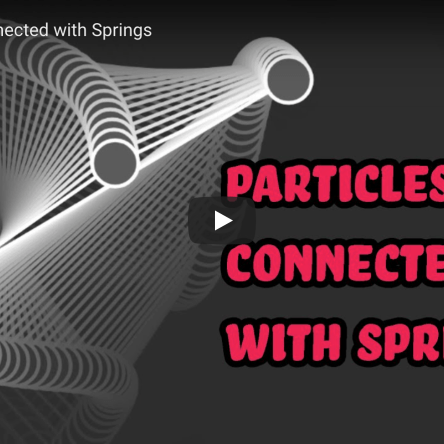
Simulation of multiple particles connected mutually with springs. Made for Dan from the Coding Train. Simon’s original code with 2 particles: https://editor.p5js.org/simontiger/sketches/18ib3ZNKm Four particles: https://editor.p5js.org/simontiger/sketches/gkexoSqZZ Simon has also started building … Continue reading Particles connected with springs and Simon’s Physics Library
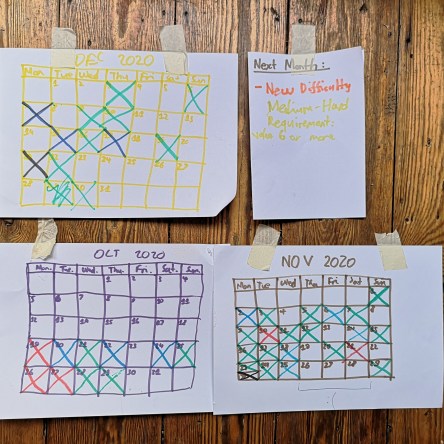
Because Simon’s regular in-person piano classes stopped due to the pandemic, he has tried various techniques to keep practicing on his own until he would be able to take lessons … Continue reading Piano as a mini habit
 Geeks out of the box