– Simon, where did you learn translating from JavaScript to Java?
– From Dan, of course! I’ve compared the two formulas for converting from 2D to 1D. (The width stands for the width of the canvas).
From 2D to 1D in Processing:
x + y * width
and
From 2D to 1D in p5:x + y * width * 4
But, why did I say, “from 2D to 1D”? Because these formulas relate to the formula for converting from Processing to p5 and vice versa. How do they relate? Because of the 4 in the p5 formula. Why? Here is the formula (i is the index into the pixel array):
p5 to Processing:
i / 4
Processing to p5:i * 4
For example, in the video I divide 365 (i) by 4 and get 91.25. Here I wrote a table of what the decimal place means:
| Decimal Value | Color Value |
|---|---|
| 00 | red |
| 25 | green |
| 50 | blue |
| 75 | alpha (transparency) |
In the example with 91.25, the decimal value is equal to 25. This is why I wrote in Processing: color(51, 255, 51, 255)
So this is how I got the green value to Processing.
This post is really about converting from p5 to Processing and vice versa. That I figured out myself. You could say that I only explained that in this post, but really I explained that and converting from 1D to 2D. That’s why I added this form:
Converting from 1D to 2D
Converting from Processing to p5 and vice versa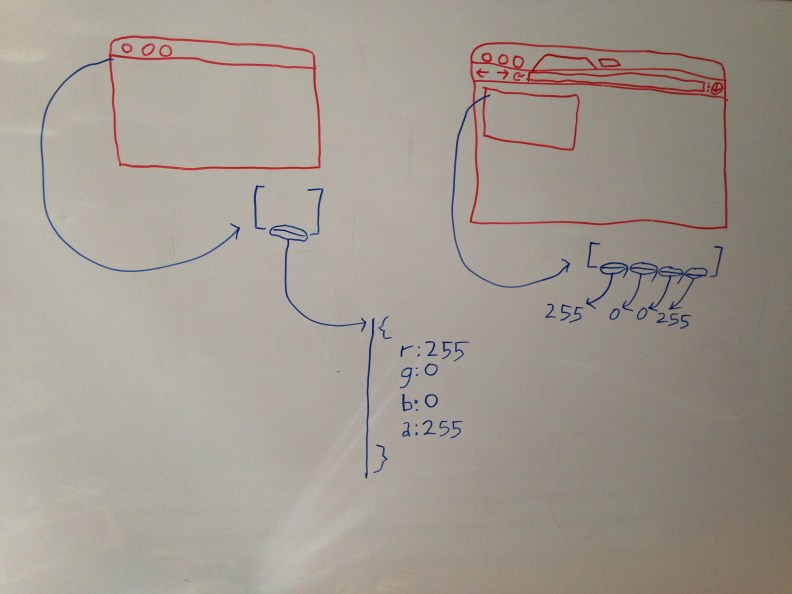
Simon writing this post in html
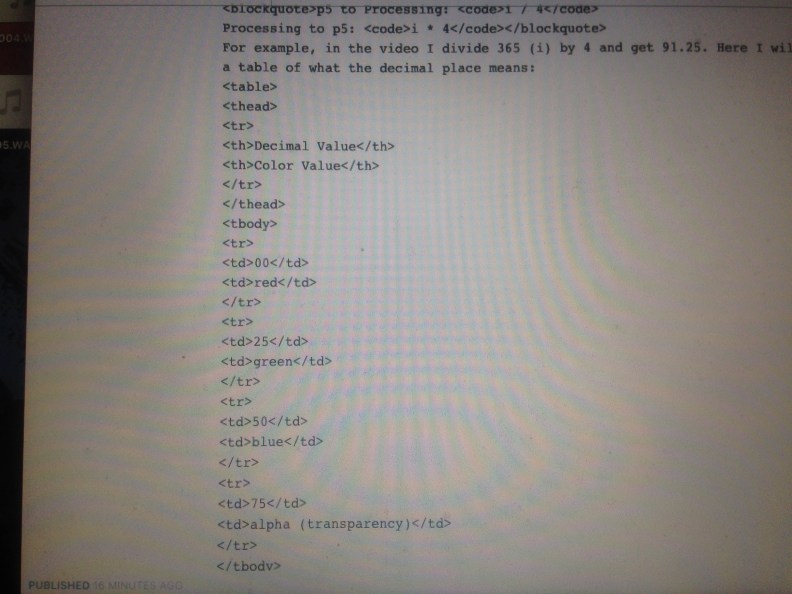
Simon wrote this table in html
 Geeks out of the box